
From mid-November through the end of December, freight volume climbs. Retailers restock, e-commerce packages pile up and delivery windows get tighter. For carriers, owner-operators and fleet managers in Dallas-Fort Worth, it’s one of the busiest stretches of the year.
It’s also the worst time to have a truck sitting on the shoulder. A single breakdown during peak season can mean missed appointments, unhappy shippers and lost loads you can’t easily replace.
The good news: most peak season breakdowns are preventable. Here’s a practical maintenance checklist to get your trucks ready before the rush hits hardest.
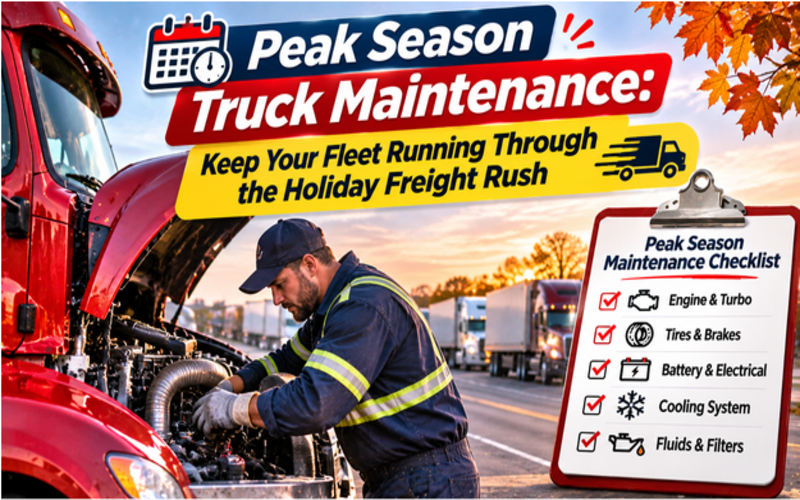
To prepare trucks for peak freight season, complete PM services before the rush, test batteries and charging systems, inspect tires and wheel ends, check air brakes and adjustment, service the cooling and fuel systems, clear any active fault codes, and inspect trailers. Set up a 24/7 mobile repair contact so breakdowns get fixed fast without long tows or shop waits.
Why Peak Season Is Hard on Trucks
- More miles in a shorter time
- Heavier loads and more stops
- Tighter schedules that make drivers push through small problems
- Cold snaps that expose weak batteries and fuel issues
- Busy shops with longer wait times for repairs
That last point matters. If every carrier waits until December to fix a problem, shop schedules fill up fast.
The Peak Season Maintenance Checklist
1. Get PM Services Done Early
If a truck is close to its next preventive maintenance interval, do it before the rush. Oil, filters, lubrication and inspections take a few hours now and can save days later.
2. Test Batteries and Charging Systems
Cold mornings and long idle periods are hard on batteries. Load-test each battery, check cables and terminals and confirm the alternator is charging properly.
3. Inspect Tires and Wheel Ends
- Check tread depth and pressure on every tire
- Look for cuts, bulges and uneven wear
- Check hub oil levels and look for seal leaks
- Confirm lug nuts are tight
More miles mean more tire wear. For blowout prevention tips, see our guide on trailer tire blowouts.
4. Check Air Brakes
Brake problems are among the most common reasons trucks are placed out of service. Check brake adjustment, listen for air leaks, and test air pressure build-up and the low-air warning. Our guide to air brake problems covers the warning signs.
5. Service the Cooling System
Check coolant level and protection, inspect hoses and belts, and look for leaks. A cooling failure on a loaded run can mean a long, expensive delay.
6. Change Fuel Filters and Drain Water
Clean fuel matters even more when temperatures drop. Replace fuel filters on schedule, drain water separators and use winter fuel or an anti-gel additive before a cold front.
7. Clear Active Fault Codes
Don’t start peak season with a check engine light on. Scan each truck and fix active codes, especially anything related to DEF, DPF or sensors that could lead to a derate.
8. Inspect Trailers
Trailers are easy to overlook. Check lights, air lines, gladhands, brakes, landing gear, doors and tires. Our trailer repair team can handle these on-site.
9. Check Lights and Reflectors
Shorter days mean more driving in the dark. Make sure every light, marker and reflector works.
10. Restock the Cab
Make sure every truck has triangles, a hi-vis vest, a flashlight, gloves, water, a spare fuel filter and cold-weather gear.
Driver Habits That Prevent Breakdowns
Your drivers see problems first. Encourage them to:
- Do thorough pre-trip and post-trip inspections
- Report warning lights, leaks and new noises right away
- Avoid excessive idling, which clogs the DPF
- Let regens finish instead of interrupting them
A quick report on Monday can prevent a breakdown on Friday.
Have a Breakdown Plan Before You Need It
Even well-maintained trucks break down. Before peak season, make sure:
- Every driver has your 24/7 mobile repair number
- Drivers know what details to share: location, truck info, symptoms and codes
- Your dispatcher knows how to reroute loads quickly
- You’ve agreed on billing with your repair provider
Why Mobile Repair Matters During Peak Season
When shops are busy and every hour counts, mobile truck repair can save the day. A mechanic comes to the truck, whether it’s on I-35, at a customer’s dock or in your yard, and fixes many problems on-site. That means no tow, no shop wait and less downtime.
If a repair does need a shop, our pickup service can move the truck so you don’t need to coordinate a separate tow.
Schedule Yard Maintenance Around Your Routes
On-site maintenance at your yard lets you service trucks overnight or between routes. Our commercial truck repair and fleet programs include scheduled PM, inspections and digital invoices for fleet accounts.
Keep Your Fleet Moving This Season
Truck Repair Expert provides 24/7 mobile diesel repair for semi trucks, box trucks, heavy-duty trucks and trailers across Dallas, Plano, Garland, Irving, Richardson, Allen and Sachse.
Call 469-617-2028 or schedule service.
Frequently Asked Questions
When is peak freight season?
It usually runs from mid-November through December, driven by holiday retail and e-commerce demand.
What maintenance should trucks get before peak season?
PM service, battery and charging tests, tire and wheel-end checks, air brake inspection, cooling and fuel system service, and fault code checks.
How can fleets reduce downtime during the holidays?
Finish maintenance early, train drivers to report problems quickly and set up a 24/7 mobile repair contact.
Can maintenance be done at our yard?
Yes. Mobile mechanics can perform many PM and repair jobs on-site.
What should drivers carry during winter peak season?
Triangles, a hi-vis vest, a flashlight, gloves, water, cold-weather gear and a spare fuel filter.