
Commercial trucks keep businesses moving. Whether a company operates delivery trucks, box trucks, work trucks, semis, or other commercial vehicles, a mechanical problem can quickly become a business problem.
A truck sitting at the side of the road can mean missed deliveries, delayed jobs, driver downtime, and unexpected expenses.
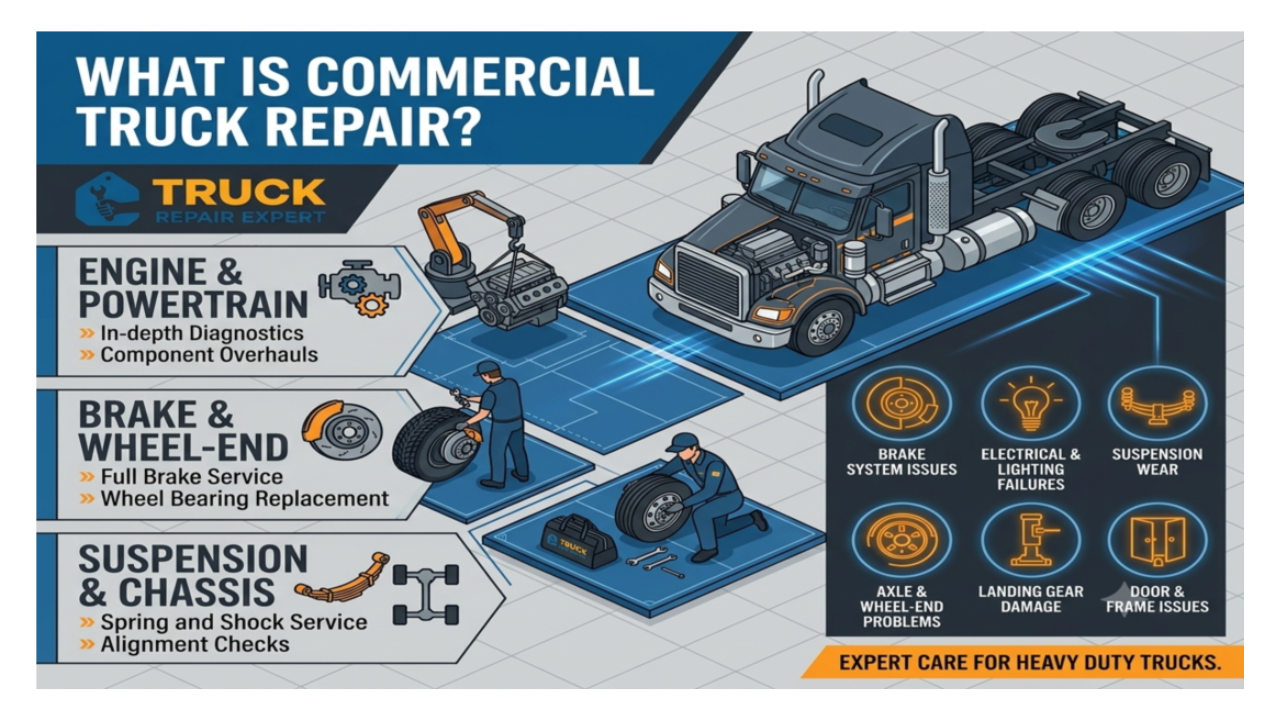
So, what is commercial truck repair? It is the diagnosis, maintenance-related repair, and replacement of components needed to keep commercial trucks safe, reliable, and operational. It can range from fixing a failed battery or brake component to diagnosing engine, transmission, electrical, cooling, or emissions problems.
For fleet managers and business owners in the DFW area, understanding the scope of commercial truck repair makes it easier to recognize problems early, plan maintenance, and reduce unplanned downtime.
What Is Commercial Truck Repair?
Commercial truck repair covers the mechanical, electrical, and safety-related work required when a commercial vehicle develops a problem or needs a component repaired or replaced.
Unlike basic maintenance, which is generally performed on a planned schedule, repair work is often triggered by a symptom, inspection finding, fault code, damaged component, or breakdown.
For example, routine maintenance may involve changing fluids and filters, while repair could involve diagnosing an oil leak, replacing a failed water pump, repairing a brake system, or resolving an engine fault.
The two work together. Effective commercial truck maintenance helps identify worn components before they turn into major repairs.
What Does Commercial Truck Repair Include?
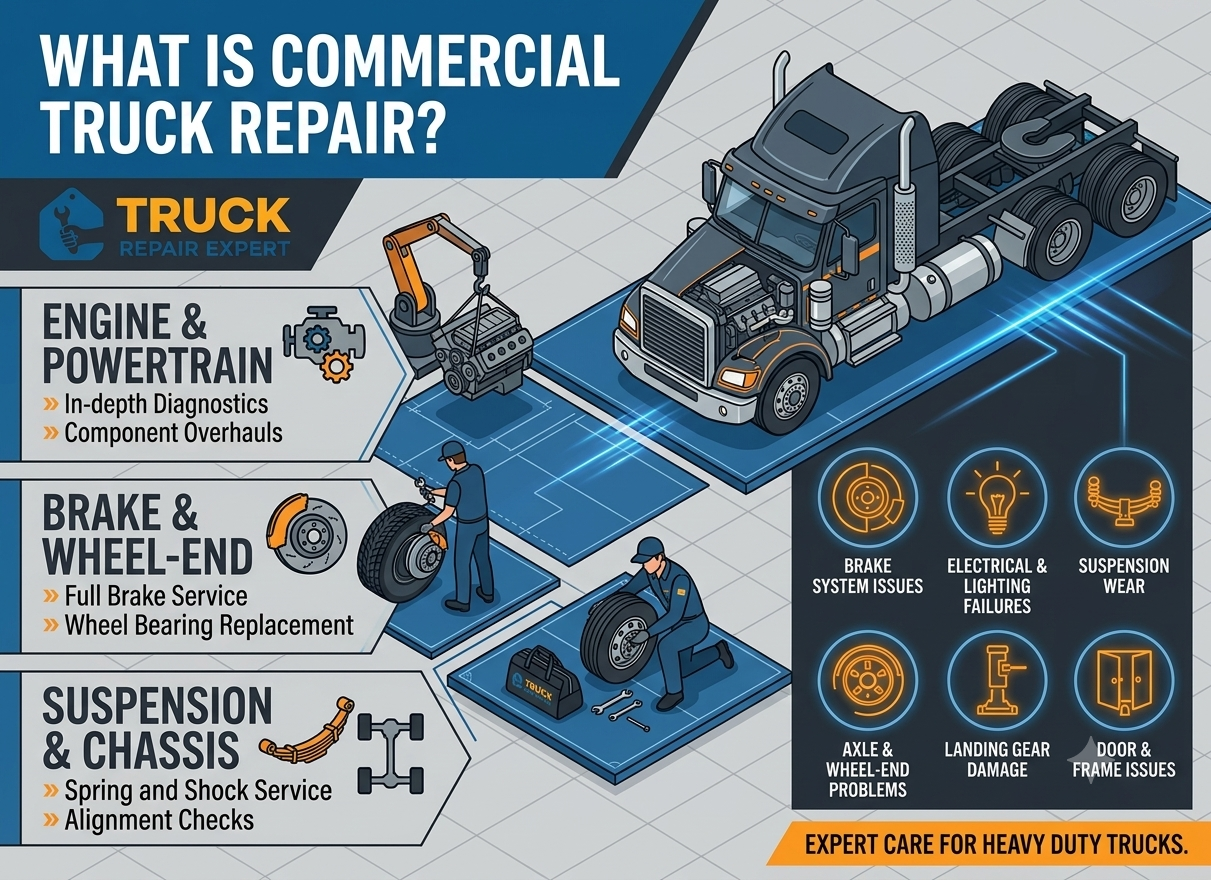
Commercial truck repair can cover nearly every major system that affects a truck’s performance, reliability, and safety.
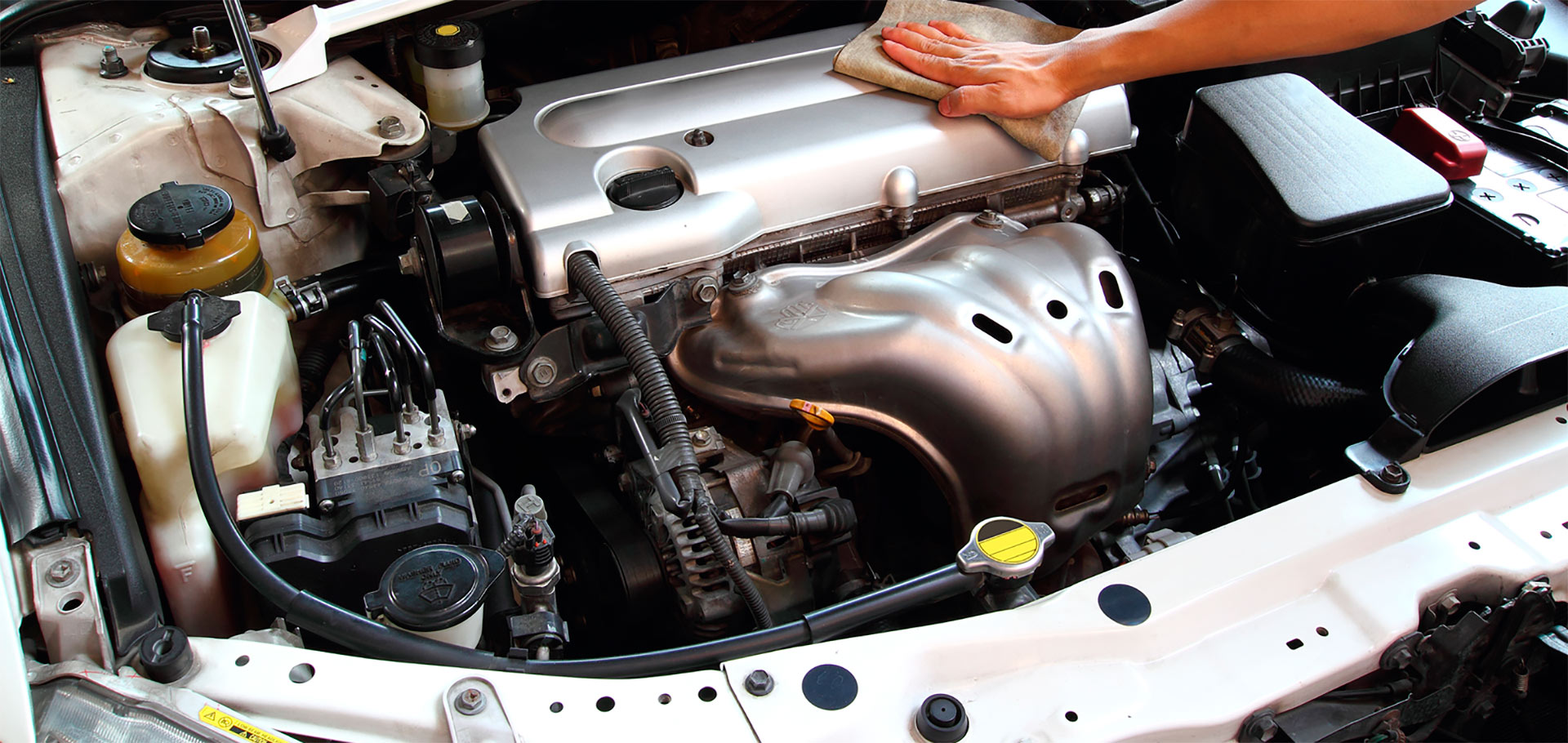
1. Engine Repair and Diagnostics
The engine is one of the most critical components of a commercial truck.
Repair services may include:
- Engine diagnostics
- Performance problems
- Oil leaks
- Cooling issues
- Overheating
- Starting problems
- Excessive smoke
- Loss of power
- Fuel-system problems
- Major engine repairs
Modern diesel engines rely on electronic controls and sensors, so professional diagnostics can be important when warning lights or performance changes appear.
2. Brake System Repair
Commercial trucks carry heavy loads, making properly functioning brakes essential.
Brake repair may involve:
- Brake pads or shoes
- Rotors and drums
- Calipers
- Air brake components
- Brake chambers
- Air lines
- ABS components
- Brake-related warning systems
If a driver notices reduced braking performance, pulling, unusual noises, or an air-pressure issue, the truck should be inspected before continuing normal operations.
3. Transmission and Drivetrain Repair
Transmission and drivetrain problems can affect acceleration, shifting, fuel economy, and overall drivability.
Common repair concerns include:
- Hard or delayed shifting
- Transmission slipping
- Fluid leaks
- Unusual drivetrain noises
- Clutch problems
- Driveshaft issues
- Differential problems
These commercial truck problems should be diagnosed early because continuing to operate a truck with a serious drivetrain fault can potentially increase the damage.
4. Electrical and Starting System Repair
Commercial trucks depend on electrical systems for far more than simply starting the engine.
Repair may include:
- Battery problems
- Alternator issues
- Starter failure
- Wiring problems
- Lighting faults
- Charging-system problems
- Electrical connections
- Sensors and control systems
Intermittent electrical problems can be particularly difficult to diagnose because the truck may appear to operate normally before the fault returns.
5. Cooling System Repair
A properly functioning cooling system helps control engine temperature under demanding operating conditions.
Repairs can include:
- Radiator problems
- Water pumps
- Thermostats
- Cooling fans
- Hoses
- Coolant leaks
- Fan-clutch issues
Overheating should never be treated as a minor inconvenience. Continued operation at excessive temperatures can result in more serious engine damage.
6. Fuel System Repair
Fuel-system problems can affect starting, power, efficiency, and engine performance.
Technicians may diagnose:
- Fuel-filter restrictions
- Injector problems
- Fuel-pressure issues
- Contaminated fuel
- Fuel leaks
- Fuel-pump problems
A truck that repeatedly struggles to start or loses power under load should be diagnosed rather than simply returned to service.
7. Suspension and Steering Repair
Suspension and steering components affect handling, ride quality, tire wear, and safety.
Repair may involve:
- Shocks
- Springs
- Air suspension
- Bushings
- Steering components
- Tie rods
- Wheel-end components
- Alignment-related problems
Uneven tire wear, excessive vibration, steering changes, or unusual movement can indicate developing suspension or steering problems.
8. Tire and Wheel Repair
Tires are another critical part of commercial vehicle operation.
Fleet truck repair may include identifying problems involving:
- Damaged tires
- Uneven tread wear
- Underinflation
- Wheel damage
- Wheel-end issues
- Tire-related roadside failures
Regular inspections help fleet managers identify tire problems before they cause a breakdown.
9. DPF, DEF, and Emissions-System Problems
Modern diesel commercial trucks use emissions systems that can become complicated to diagnose.
Problems may involve:
- DPF regeneration
- DEF system faults
- SCR components
- Sensors
- Emissions warning lights
- Derate conditions
- Aftertreatment fault codes
Ignoring an emissions warning can eventually result in reduced engine performance or an operational shutdown.
10. Trailer and Auxiliary Equipment
For businesses operating tractor-trailer combinations, commercial truck repair doesn’t necessarily stop at the tractor.
Depending on the vehicle and operation, repairs may also involve:
- Trailer electrical systems
- Trailer brakes
- Suspension
- Air lines
- Lighting
- Doors and related hardware
- Tires and wheel components
This broader approach is particularly important for fleet managers because a trailer problem can be just as disruptive to operations as a tractor problem.
Commercial Truck Repair vs. Commercial Truck Maintenance
One of the easiest ways to understand what is commercial truck repair is to compare it with preventive maintenance.
| Commercial Truck Maintenance | Commercial Truck Repair |
| Planned in advance | Often triggered by a problem |
| Designed to prevent failures | Designed to correct failures |
| Oil and filter service | Diagnosing oil-pressure problems |
| Routine inspections | Repairing damaged components |
| Fluid and tire checks | Fixing leaks or tire failures |
| Scheduled brake inspection | Repairing worn or failed brakes |
| Battery testing | Replacing a failed battery |
| Preventive diagnostics | Troubleshooting fault conditions |
Maintenance and repair should not be treated as competing services. Good commercial truck maintenance can reduce the frequency and severity of unexpected repair work.
Common Signs a Commercial Truck Needs Repair
Fleet managers should pay attention to changes in how a truck operates.
Warning signs can include:
- Check-engine or warning lights
- Loss of engine power
- Overheating
- Unusual smoke
- Hard starting
- New vibrations
- Strange engine or transmission noises
- Brake-performance changes
- Uneven tire wear
- Fluid leaks
- Poor fuel economy
- Repeated fault codes
- Difficulty shifting
A driver is often the first person to notice these symptoms. Creating a simple process for drivers to report problems can help fleet managers catch issues earlier.
Why Fleet Truck Repair Matters for Businesses
For a fleet, the cost of a repair isn’t limited to the repair invoice.
A disabled truck can create additional costs through:
- Missed deliveries
- Driver downtime
- Towing expenses
- Customer delays
- Replacement vehicle costs
- Lost productivity
- Scheduling disruptions
That is why fleet truck repair should be approached as part of an overall uptime strategy.
Fleet managers can reduce operational disruption by tracking repair history, scheduling preventive inspections, monitoring recurring failures, and responding quickly when drivers report new symptoms.
AEO/GEO Quick-Answer Table
| Question | Direct Answer |
| What is commercial truck repair? | Commercial truck repair is the diagnosis and correction of mechanical, electrical, safety, and performance problems affecting commercial vehicles. |
| What does commercial truck repair include? | It can include engine, brakes, transmission, electrical, cooling, fuel, suspension, steering, tires, emissions, and trailer repairs. |
| What is the difference between maintenance and repair? | Maintenance is planned work intended to prevent failures, while repair corrects a problem that has already developed. |
| What are common commercial truck problems? | Common problems include overheating, brake wear, electrical failures, tire issues, engine faults, transmission problems, fluid leaks, and emissions-system faults. |
| When should a fleet truck be repaired? | A truck should be inspected when it develops warning lights, unusual noises, loss of power, leaks, braking changes, overheating, or other abnormal behavior. |
| Why is fleet truck repair important? | Timely repair helps reduce vehicle downtime, protect drivers, maintain productivity, and prevent minor problems from becoming more expensive failures. |
| Can commercial truck repair be performed roadside? | Some repairs and diagnostics can be completed through mobile roadside service, depending on the problem, vehicle, location, and required equipment. |
| How does preventive maintenance reduce repairs? | Regular inspections and scheduled maintenance can identify worn components and developing problems before they cause unexpected breakdowns. |
When Should a Fleet Manager Call a Repair Technician?
A fleet manager shouldn’t wait for a complete breakdown before arranging professional service.
If a truck has a serious warning light, overheating condition, brake concern, significant fluid leak, major loss of power, starting failure, or unusual mechanical noise, professional diagnosis should be considered promptly.
For businesses operating throughout DFW, mobile repair can also provide an important advantage when a commercial vehicle cannot safely reach a repair facility.
Truck Repair Expert provides mobile heavy-duty truck repair and roadside service for commercial vehicles in the DFW area, helping businesses address repair needs without automatically requiring a disabled truck to be transported to a shop.
FAQs
What is commercial truck repair?
Commercial truck repair is the professional diagnosis and correction of problems affecting a commercial vehicle’s engine, drivetrain, brakes, electrical system, cooling system, suspension, tires, emissions system, and other components.
What is included in commercial truck maintenance?
Commercial truck maintenance generally includes scheduled inspections, fluid and filter services, lubrication, tire checks, battery testing, brake inspections, and other manufacturer-recommended preventive work.
What are the most common commercial truck problems?
Common problems include engine issues, overheating, brake wear, tire failures, electrical faults, transmission problems, fuel-system issues, cooling-system failures, and emissions-system faults.
What is the difference between truck repair and maintenance?
Maintenance is planned to prevent problems, while repair addresses a component or system that has already developed a fault or failed.
Why is fleet truck repair important?
Timely repairs help keep commercial vehicles operational, reduce unplanned downtime, protect drivers, and prevent smaller mechanical problems from developing into larger failures.
Can a commercial truck be repaired on the roadside?
Some commercial truck repairs can be performed through mobile roadside service. The feasibility depends on the specific problem, vehicle, location, parts, and equipment required.
How can fleet managers reduce commercial truck repair costs?
Regular preventive maintenance, driver inspections, accurate repair records, early diagnostics, and addressing minor problems quickly can help reduce larger unexpected repair expenses.
Conclusion
Understanding what is commercial truck repair helps fleet managers and business owners make better decisions about vehicle uptime and maintenance.
Commercial truck repair is much broader than fixing an engine after a breakdown. It can include brakes, transmissions, electrical systems, cooling systems, fuel systems, suspension, tires, emissions equipment, and trailer components.
For a DFW fleet, the goal should not simply be to repair a truck after it fails. A combination of preventive maintenance, driver reporting, professional diagnostics, and timely fleet truck repair can help keep vehicles working and reduce disruptions to the business.
When commercial truck problems appear, addressing them early is often the better business decision than waiting until a truck becomes completely disabled.