
Semi truck tire replacement is one of the most important maintenance decisions for commercial truck operators. Tires directly affect vehicle stability, braking performance, fuel efficiency, and overall road safety. While routine inspections can help identify issues early, many drivers are unsure when a tire has reached the point where replacement is necessary.
Understanding the warning signs of tire wear and damage can help reduce unexpected breakdowns and improve vehicle reliability. This guide explains the most common indicators that a tire should be replaced and why timely action matters for commercial trucking operations.
Why Tire Condition Matters for Commercial Trucks
Commercial trucks travel thousands of miles under varying road and weather conditions. As a result, tires experience continuous stress from heavy loads, long-distance travel, and changing temperatures.
When tires wear beyond safe limits, several problems can occur:
- Reduced traction
- Longer stopping distances
- Increased risk of blowouts
- Higher fuel consumption
- Reduced vehicle stability
Regular inspections and timely maintenance help identify potential issues before they become serious safety concerns.
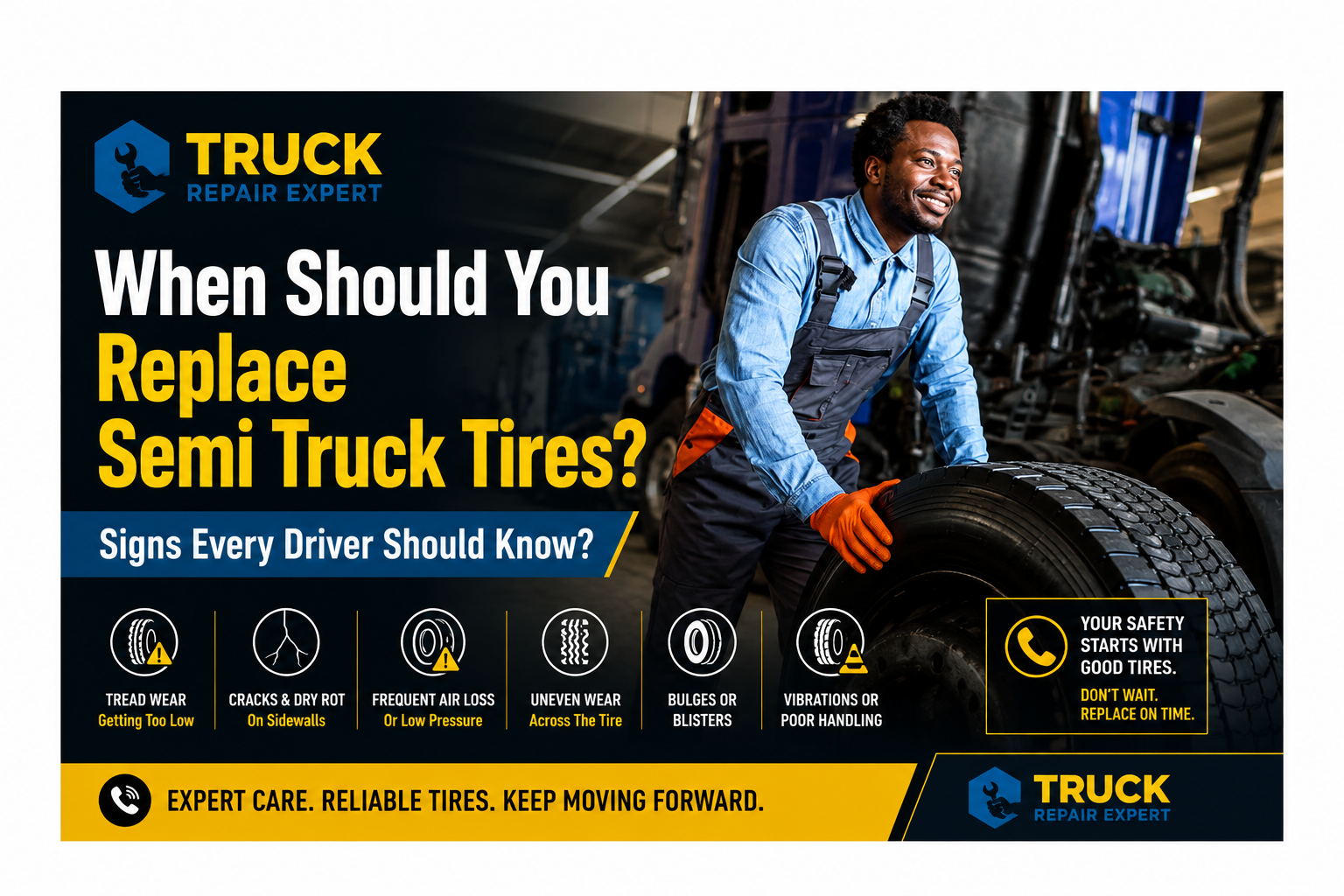
Common Signs You Need a Semi Truck Tire Replacement
Recognizing tire wear early can help drivers avoid roadside emergencies and costly downtime.
Uneven Tread Wear
Uneven tread wear is one of the most visible indicators that a tire may need replacement.
Common wear patterns include:
- Wear on one side of the tire
- Center tread wear
- Edge wear
- Cupping or scalloping
These patterns often indicate alignment issues, suspension problems, or improper tire inflation. Even if the underlying issue is corrected, severely worn tires may still require replacement.
Low Tread Depth
Tread depth plays a critical role in maintaining traction, especially during wet weather.
As tread wears down, tires become less effective at:
- Dispersing water
- Maintaining grip
- Preventing hydroplaning
- Supporting stable braking
Drivers should regularly measure tread depth during inspections. Once tread approaches legal or manufacturer-recommended limits, replacement should be considered.
Sidewall Damage
The sidewall is a critical structural component of the tire.
Visible damage such as:
- Cracks
- Bulges
- Cuts
- Exposed cords
can weaken the tire and increase the risk of failure. In many cases, sidewall damage cannot be safely repaired, making replacement necessary.
Frequent Air Pressure Loss
Tires that consistently lose air pressure may have:
- Internal damage
- Bead leaks
- Valve stem issues
- Punctures
While some situations can be addressed through semi tire repair, recurring pressure loss may indicate deeper structural concerns that justify replacement.
Excessive Vibration While Driving
Unexpected vibration can signal tire-related issues.
Possible causes include:
- Internal tire separation
- Uneven wear
- Tire imbalance
- Structural damage
If vibration persists after balancing and inspection, replacing the affected tire may be necessary.
Tire Age
Even tires with acceptable tread depth eventually deteriorate due to age.
Factors that contribute to aging include:
- UV exposure
- Heat cycles
- Environmental conditions
- Long-term storage
Over time, rubber compounds naturally break down. Therefore, tire age should always be considered alongside visible wear.
Tire Inspection Checklist
The following table highlights key inspection areas that drivers should review regularly.
| Inspection Area | What to Look For | Potential Action |
|---|---|---|
| Tread Depth | Low or uneven tread | Replace if below safe limits |
| Sidewalls | Cracks, cuts, bulges | Inspect and replace if damaged |
| Air Pressure | Frequent pressure loss | Diagnose cause and repair or replace |
| Tire Surface | Embedded debris or punctures | Evaluate for repair |
| Vibration | Unusual steering or ride vibration | Perform inspection |
| Tire Age | Signs of aging rubber | Consider replacement |
Routine inspections help identify problems before they affect vehicle performance.
Risks of Delaying Tire Replacement
Ignoring tire wear can increase safety and operational risks.
Increased Blowout Risk
Worn or damaged tires are more vulnerable to failure under heavy loads and highway speeds.
Reduced Fuel Efficiency
Poor tire condition can increase rolling resistance, which may lead to higher fuel consumption.
Unexpected Downtime
A tire failure often results in roadside delays, delivery interruptions, and additional service costs.
Safety Concerns
Tires with reduced traction can negatively impact braking and vehicle handling, especially during adverse weather conditions.
Replacing worn tires before failure helps reduce these risks.

Repair vs. Replacement: Understanding the Difference
Not every tire issue requires a complete replacement. Some conditions can be addressed through professional semi tire repair services.
Repairs may be appropriate for:
- Small tread-area punctures
- Minor leaks
- Certain valve-related issues
However, replacement is often recommended when:
- Sidewall damage is present
- Structural integrity is compromised
- Tread wear exceeds safe limits
- Tire aging becomes significant
A qualified technician can determine whether repair or replacement is the safest option.
The Importance of Semi Truck Tire Roadside Service
Tire problems do not always occur near a repair facility. When a failure happens on the road, access to reliable semi truck tire roadside service can help restore mobility and reduce downtime.
Roadside tire services may assist with:
- Flat tire response
- Tire inspections
- Emergency tire replacement
- Air pressure issues
- Tire-related breakdown support
Prompt roadside assistance can help drivers address tire concerns safely while minimizing operational disruption.
Tire Inspection Best Practices for Fleet Operators and Drivers
A structured inspection process helps identify tire issues early.
Recommended practices include:
Conduct Daily Walk-Around Inspections
Drivers should inspect tires before each trip.
Monitor Tire Pressure Regularly
Maintaining proper inflation supports tire longevity and performance.
Record Tire Wear Patterns
Tracking wear over time can reveal alignment or suspension issues.
Schedule Professional Inspections
Periodic inspections by trained technicians provide an additional layer of safety.
Consistent monitoring can help reduce emergency repairs and extend tire life.
Semi Truck Tire Maintenance Tips
Preventive maintenance remains one of the most effective ways to maximize tire performance.
Maintain Proper Inflation
Incorrect tire pressure can accelerate wear and reduce fuel efficiency.
Rotate Tires When Appropriate
Rotation helps distribute wear more evenly across tire positions.
Address Alignment Issues Quickly
Poor alignment can significantly shorten tire lifespan.
Avoid Overloading
Excessive weight places additional stress on tires and increases wear.
Inspect After Road Hazards
Potholes, debris, and curb impacts can cause hidden damage that may not be immediately visible.
These maintenance practices support safer and more reliable truck operation.
How Truck Repair Expert Supports Tire Services
Truck Repair Expert provides commercial truck repair and tire-related services designed to help drivers address tire issues efficiently.
For tire concerns that require professional evaluation, their dedicated semi truck tire replacement services page provides additional information about available tire service solutions.
Conclusion
Knowing when a semi truck tire replacement is necessary is essential for maintaining vehicle safety, performance, and reliability. Signs such as uneven tread wear, low tread depth, sidewall damage, recurring air pressure loss, excessive vibration, and aging tires should never be ignored.
Routine inspections, proper maintenance, and timely service decisions help reduce the risk of breakdowns while supporting safe commercial vehicle operation. When tire concerns arise, professional evaluation can help determine whether repair or replacement is the appropriate solution.
For additional assistance regarding commercial truck tire concerns, contact us today.