
Trailers don’t get the same attention as the tractor pulling them, but they carry the load, house their own brakes and electrical system, and take a serious beating from heavy freight, long hauls, and constant road vibration. When a trailer develops a problem, it’s not just an inconvenience — brake and lighting issues in particular are among the top causes of DOT out-of-service violations and roadside citations.
This guide covers the trailer problems drivers, owner-operators, and dispatchers run into most often, what typically causes each one, and how to tell whether it’s something to note for the next inspection or something that needs attention right now.
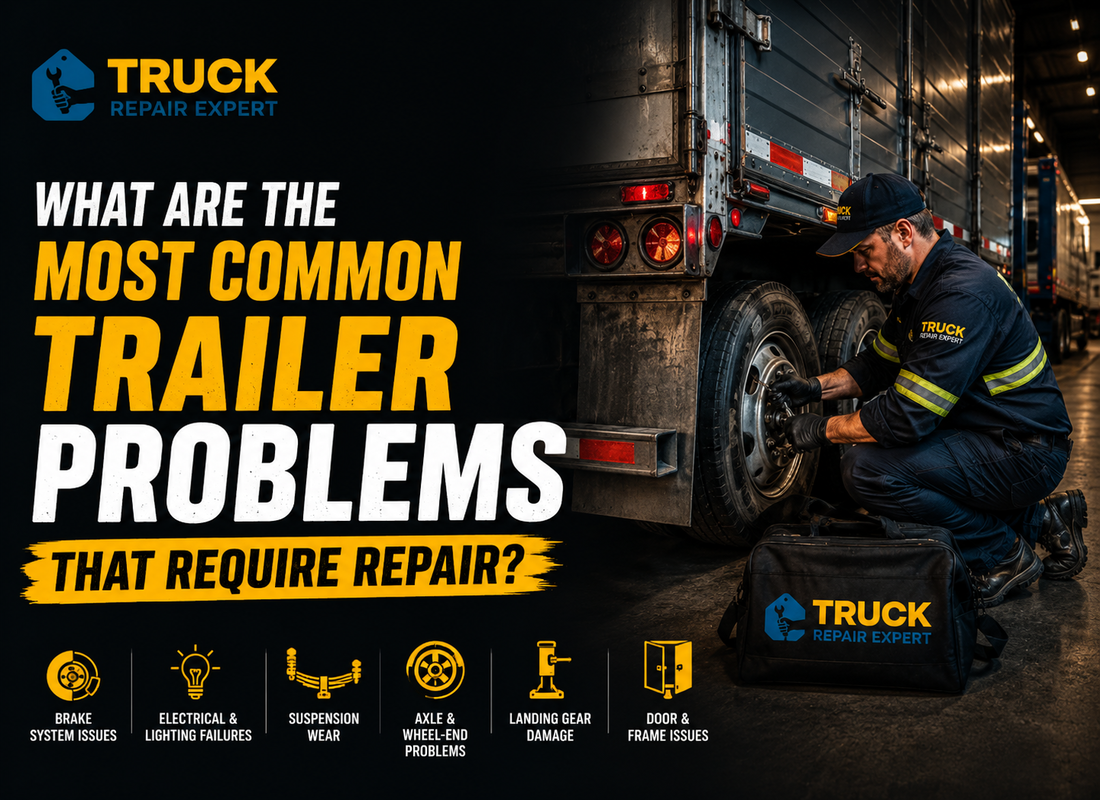
The most common trailer problems that require repair are brake system issues (air leaks, worn pads, ABS faults), electrical and lighting failures, suspension wear, landing gear damage, axle and wheel-end problems, and door or frame issues. Brake and lighting problems should be treated as urgent since they affect both safety and DOT compliance — the rest can often be scheduled, but shouldn’t be ignored indefinitely.
1. Brake System Problems
Trailer brakes rely on a compressed air system, and that system is the single most common source of trailer repair calls. Left unaddressed, brake issues aren’t just a compliance risk — they’re a genuine safety hazard for a loaded trailer.
What it looks like:
- A hissing sound near the wheels or air lines — a sign of an air leak
- Reduced stopping power or the trailer pulling unevenly during braking
- Slow air pressure buildup after connecting the trailer
- A brake warning light that won’t clear
What usually causes it:
Cracked air hoses, loose fittings, and worn seals are the most frequent source of air leaks. Worn brake shoes, glazed or cracked drums, and slack adjusters that have drifted out of spec all reduce stopping performance. Cold weather makes things worse, since moisture trapped in the air system can freeze and block airflow entirely.
Brake issues account for the largest share of DOT roadside violations of any trailer system, which is exactly why they’re worth addressing at the first sign of trouble rather than waiting for an inspection to catch it.
2. Electrical and Lighting Failures
A trailer’s lighting and ABS systems depend entirely on a clean electrical connection running from the tractor through the 7-way plug — and that connection point takes a lot of abuse from weather, road grime, and constant plugging and unplugging.
What it looks like:
- Brake lights, turn signals, or marker lights that are dim, flickering, or dead
- A trailer ABS light that stays on or flashes
- Lights that work intermittently, especially over bumps or in wet weather
What usually causes it:
Corrosion inside the 7-way plug or pigtail connector is one of the most common causes of both lighting failures and trailer ABS faults — in fact, when an ABS light only illuminates while a trailer is connected, the trailer’s electrical connection is very often the actual source rather than the tractor. Beyond the connector itself, damaged wiring harnesses, burnt-out bulbs, and corroded light sockets round out the most frequent causes.
Because functioning lights are both a safety requirement and a DOT compliance item, this is one category worth checking before every trip, not just when something visibly stops working.
3. Suspension Wear
A trailer’s suspension absorbs road shock and keeps the load stable — and because it’s constantly working under heavy weight, it wears down steadily over time rather than failing all at once.
What it looks like:
- Excessive bounce or sway, especially on turns or rough roads
- The trailer sitting noticeably lower on one side
- Uneven tire wear that keeps recurring even after tire replacement
What usually causes it:
Broken spring hangers, worn leaf spring leaves, leaking shocks, and failing air suspension bags are the most common culprits. Air suspension failures in particular are common on modern trailers, since the air bags, lines, and height control valves are all exposed to constant road vibration and weather.
Suspension problems tend to compound if ignored — a sagging or uneven suspension accelerates tire wear and can eventually affect trailer stability, so it’s worth addressing before it becomes a bigger repair.
4. Landing Gear Problems
Landing gear supports the trailer’s front end whenever it’s disconnected from the tractor, and while it’s easy to overlook, a failure here can mean a trailer that won’t stand — or worse, one that drops unexpectedly during connection or disconnection.
What it looks like:
- Difficulty cranking the landing gear up or down
- Visibly bent or uneven legs
- Rust or heavy corrosion on the gear mechanism
What usually causes it:
Parking on uneven ground puts uneven weight on one leg, which over time can cause bending. Improper load distribution inside the trailer has a similar effect. Corrosion is the other major factor, especially for trailers regularly exposed to moisture or road salt, which weakens the metal and accelerates other types of damage.
5. Axle and Wheel-End Problems
Axles and wheel ends carry the full weight of the load, which makes them a high-wear area — especially for trailers that consistently haul near their maximum capacity.
What it looks like:
- Unusual noise from the wheel wells, especially at speed
- Uneven or rapid tire wear
- A trailer that feels unstable or pulls during towing
What usually causes it:
Axles can bend or become misaligned from sustained heavy loads, road impacts, or inadequate lubrication, leading to irregular tire wear and, if ignored long enough, structural strain on the trailer frame. Wheel bearing wear is a related but separate issue, usually first noticed as a growing noise from the wheel area rather than a handling change.
6. Doors and Frame Issues
Less dramatic than brakes or suspension, but still a common source of repair calls — particularly for trailers in constant daily use at loading docks.
What it looks like:
- Doors that stick, don’t seal properly, or won’t latch securely
- Soft or rotted floorboards
- Rusted crossmembers or visible frame damage
What usually causes it:
Repeated impacts at loading docks are the most common cause of door and hinge damage. Floor and frame issues typically develop from long-term moisture exposure, particularly in older trailers or those hauling freight that traps humidity inside the trailer body.
How to Tell What’s Urgent vs. What Can Wait
Brake system faults, ABS warning lights, and non-functioning lights should always be treated as urgent — these directly affect safety and can result in a roadside out-of-service order. Suspension, landing gear, axle, and door issues are typically safe to schedule for repair, but shouldn’t be pushed off indefinitely, since minor wear in these areas tends to escalate into bigger, more expensive problems the longer it’s ignored.
A Quick Pre-Trip Trailer Check
- Walk the trailer and test every light — brake lights, turn signals, and markers
- Listen for air leaks at each brake chamber after connecting
- Crank the landing gear fully up and confirm it locks
- Open and close all doors, checking hinges, latches, and seals
- Look for broken springs, leaking air bags, or loose U-bolts in the suspension
- Confirm the ABS light cycles off after startup — a constant light means a fault
FAQs: Common Trailer Problems
What’s the most common reason a trailer needs repair?
Brake system issues — particularly air leaks and worn components — are the most frequent reason trailers require repair, and they account for the largest share of DOT roadside violations.
Why does my trailer ABS light stay on?
This is most often caused by a corroded or damaged connection at the 7-way plug or pigtail wiring, rather than an actual fault in the ABS module itself. It’s worth checking the connector before assuming the worst.
Can trailer repairs be done roadside, or does it need a shop?
Many common issues — lighting, air leaks, brake adjustments, minor electrical faults — can be diagnosed and repaired on-site by a mobile technician. More involved structural, frame, or major axle work typically requires a shop visit.
How often should I inspect my trailer for these issues?
A quick pre-trip check of lights, brakes, and landing gear should happen before every trip. A more thorough suspension, axle, and frame inspection is worth doing on a regular maintenance schedule, not just when something visibly goes wrong.
Is a swaying or bouncing trailer dangerous to keep driving?
It can be. Excessive sway or bounce usually points to a suspension component failure, which affects load stability and can worsen quickly — it’s worth having inspected before continuing a long haul.
The Bottom Line
Trailer problems tend to follow a predictable pattern — brakes, electrical, suspension, landing gear, axles, and doors — and catching the early warning signs during routine checks is far cheaper than dealing with a roadside failure or an out-of-service citation. Knowing which issues are urgent and which can be scheduled helps keep freight moving without unnecessary downtime.
If your trailer is showing any of these warning signs anywhere across Dallas–Fort Worth, Las Vegas, or Oakland, Truck Repair Expert’s mobile technicians diagnose and repair most trailer issues on-site — brakes, electrical, suspension, and more — so your trailer stays road-ready without a shop visit.